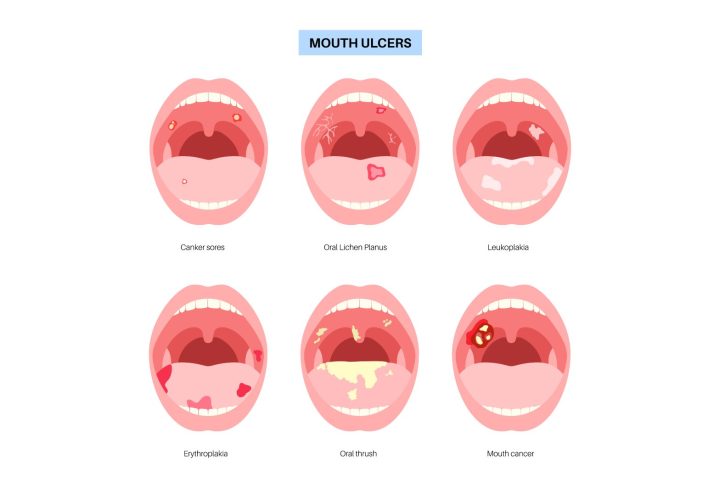
What Are Oral Ulcers?
Oral ulcers are small, painful sores that form inside the mouth. These mouth sores can appear on the tongue, gums, cheeks, or lips. Sometimes, people call them canker sores or oral lesions. Although most oral ulcers are not dangerous, they can make eating and talking uncomfortable. According to the World Health Organization, oral ulcers are common and affect people of all ages. In many cases, these sores heal on their own within one to two weeks. However, some ulcers may last longer or return often.
Common Symptoms of Oral Ulcers
Oral ulcers have several signs that help you spot them early. For example, you may notice:
Usually, these symptoms last for about one to two weeks. But if the sores do not heal or get worse, you should see a doctor. In some cases, mouth sores can signal a more serious health problem.
Causes of Oral Ulcers
Many things can cause oral ulcers. While some triggers are common, others are less well known. Here are some possible causes:
For some people, oral ulcers come back often. In these cases, doctors may look for an underlying cause. The Centers for Disease Control and Prevention notes that most mouth sores are not linked to serious diseases.
How Oral Ulcers Are Diagnosed
Doctors usually diagnose oral ulcers by looking at the sores and asking about your symptoms. First, they may ask how long you have had the sores and if they return often. Next, your doctor might check your mouth for other signs, like swelling or infection. Sometimes, they may order blood tests to check for vitamin deficiencies or other health problems. Rarely, a small sample of the sore (a biopsy) is needed to rule out other conditions. Most of the time, no special tests are needed for simple canker sores or mouth ulcers.
Treatment Options for Oral Ulcers
Most oral ulcers heal on their own. However, treatment can help reduce pain and speed up healing. Some common options include:
In rare cases, if oral ulcers do not heal or keep coming back, your doctor may suggest further tests. According to the CDC, most mouth sores are not serious and respond well to simple treatments.
Tips for Managing Oral Ulcers at Home
While oral ulcers can be painful, several home care steps can help you feel better. For instance, you can:
Additionally, using a straw for drinks may help avoid touching the sore. If you have frequent mouth sores, keeping a food diary may help you find triggers.
Preventing Oral Ulcers
Although not all oral ulcers can be prevented, some steps may lower your risk. For example, you can:
In many cases, these simple habits can help prevent mouth sores and keep your mouth healthy. If you live in a specific area, your local dentist or healthcare provider can offer more advice tailored to your needs.